
Liquid cooling in EV charging is often discussed as a cable topic: thinner, lighter, easier-to-handle cables capable of carrying higher continuous current. That is a genuine benefit, but it addresses only one of two independent thermal bottlenecks in a high-power charging system.
Two separate bottlenecks, not one dependent system
A charging system has two distinct heat sources that can each independently trigger derating:
- The cable, which heats up under sustained high current due to resistive losses
- The power module, the power electronics assembly (rectifiers, IGBTs/MOSFETs, DC/DC conversion stages) that generates and converts the power itself
These are separate thermal systems with separate cooling circuits. Cooling one does not cool the other. Each, left uncooled, can independently force the system to reduce output to protect itself. In most high-power DC systems, semiconductor devices such as IGBTs and diodes are limited to junction temperatures below roughly 150–175°C, and exceeding this threshold reduces system efficiency while accelerating wear — making the power module, in many designs, the more frequent and more severe source of derating in continuous high-power operation.
Not every product needs to cool both — it depends on the duty cycle
Which bottleneck actually needs to be addressed depends on how a product is used, not on a fixed rule. Two products from our own portfolio illustrate this well:
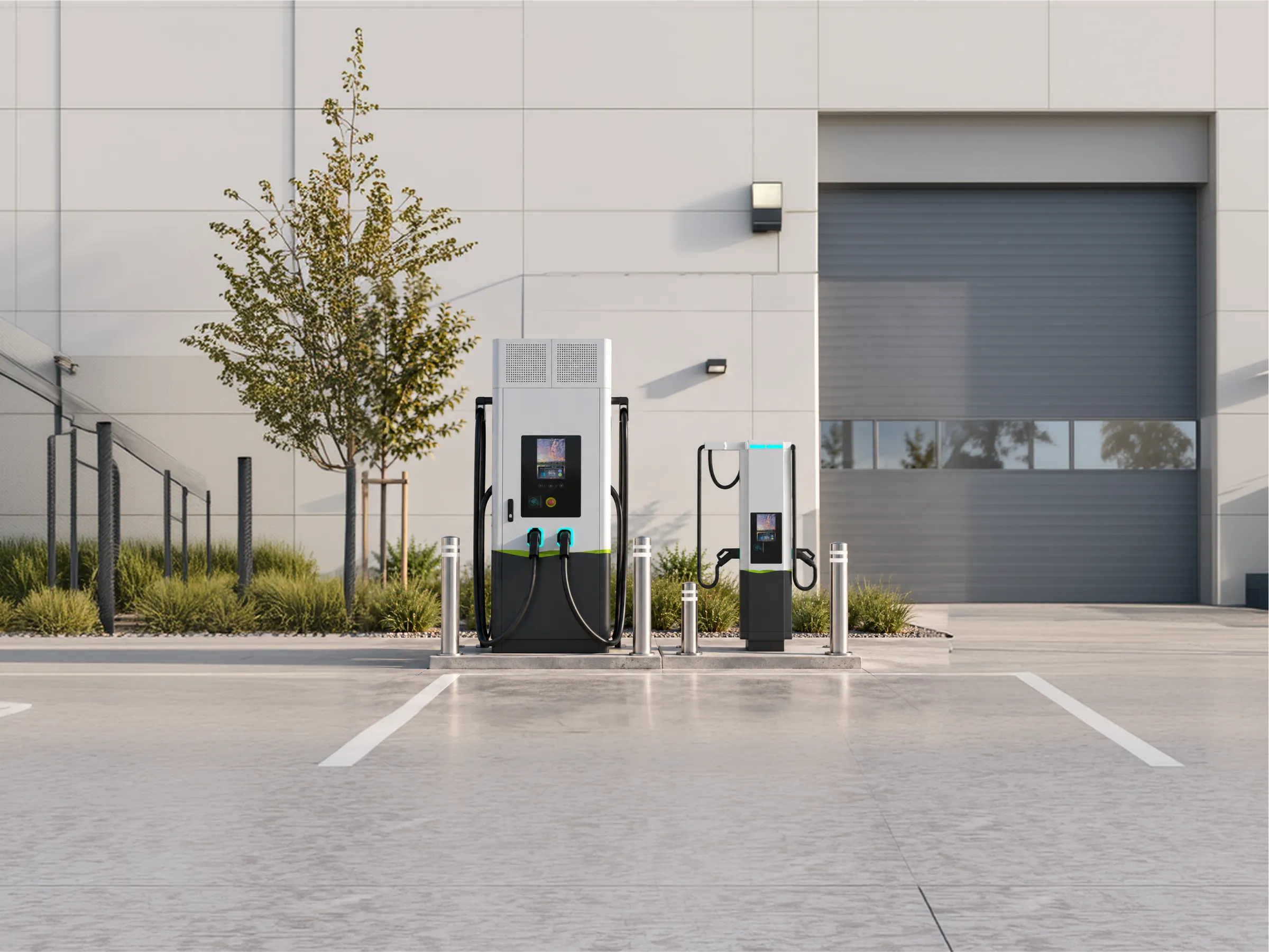
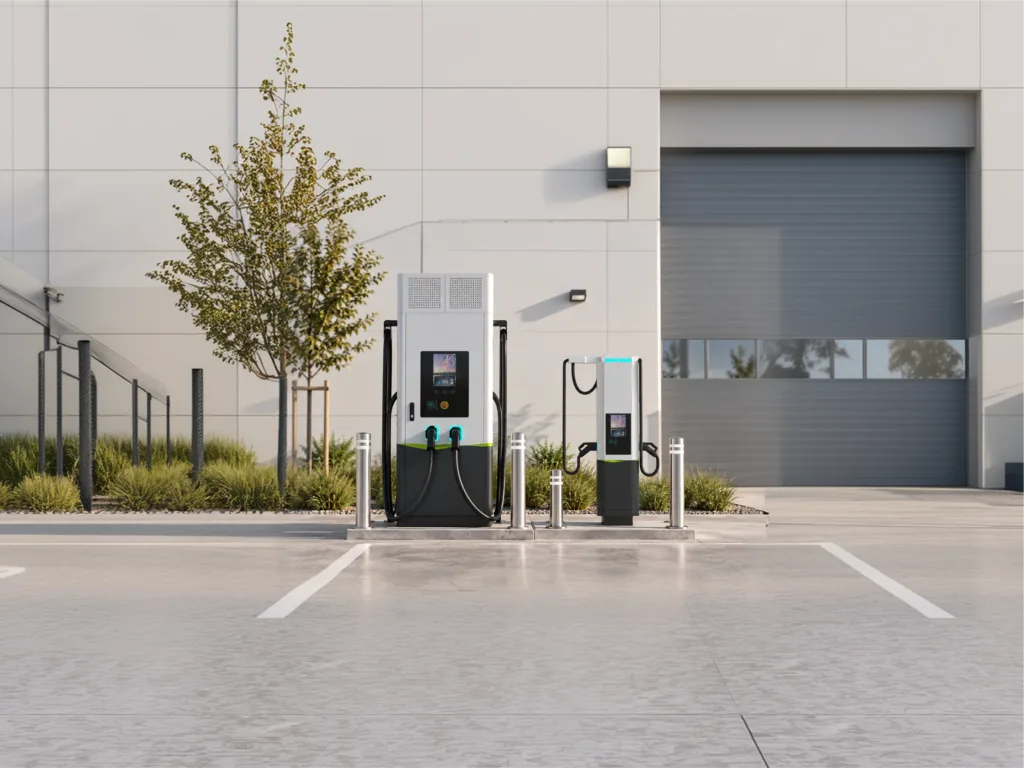
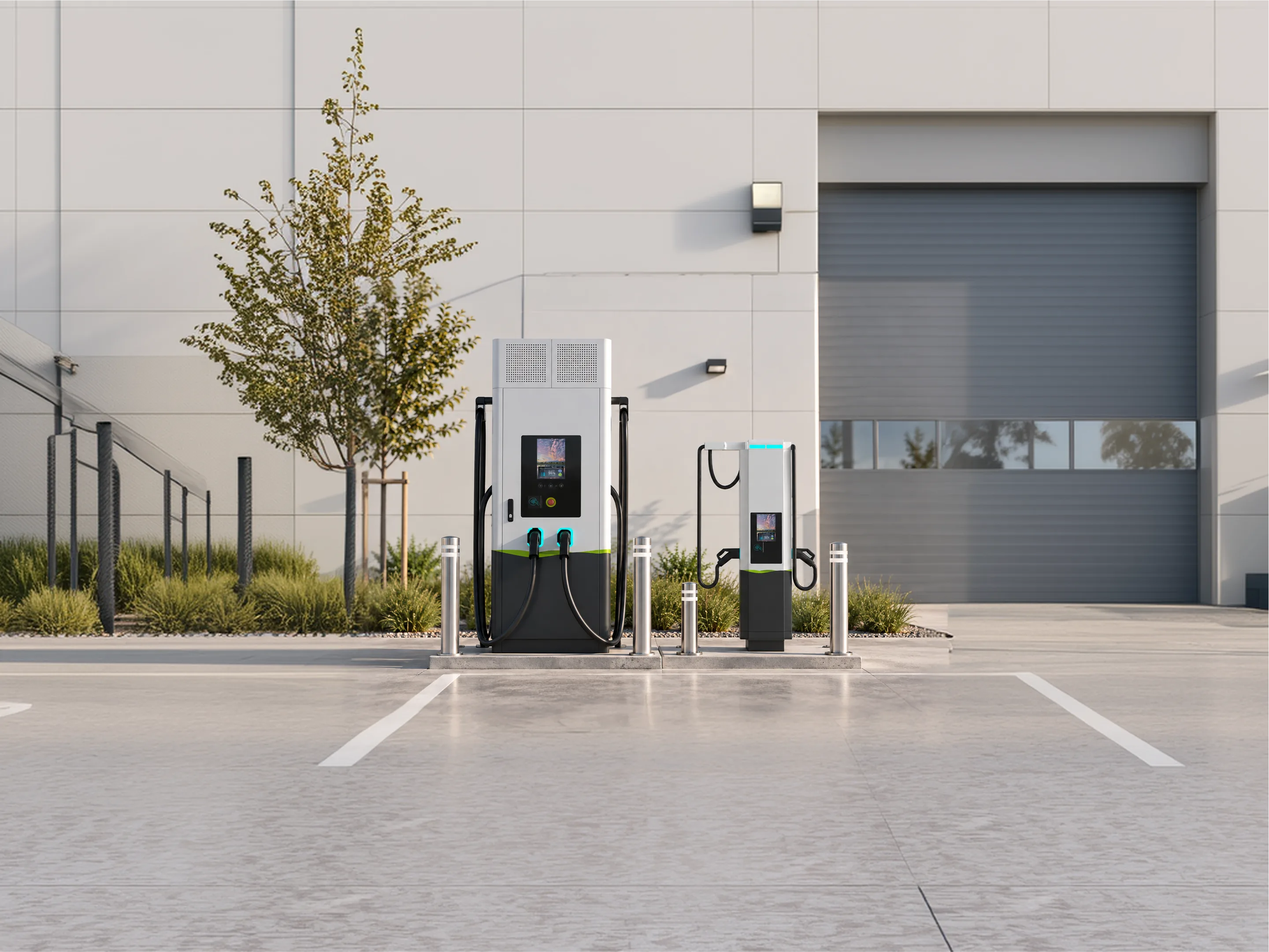
- DC80 Mobile liquid-cools the power module only. For its intended use — flexible, portable deployment — this is sufficient to eliminate derating under normal operating conditions, while keeping the unit lighter and easier to move.
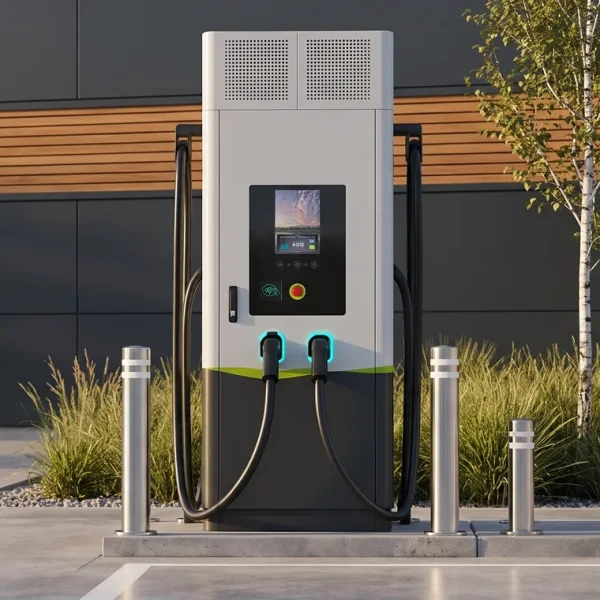
- DC480, built for continuous, high-utilization standalone or CPU-based installations, liquid-cools both the cable and the power module, because sustained full-power operation in this class puts both under continuous thermal load.
The design principle is the same in both cases: address whichever bottleneck the product’s real operating profile actually reaches — not the theoretical maximum, but the sustained load the product is engineered for.
| Product | Power module | Charging cable | Operating profile |
|---|---|---|---|
| DC80 Mobile | Liquid-cooled | Not liquid-cooled | Flexible, portable deployment |
| DC80 LQ | Liquid-cooled | Liquid-cooled | Continuous, high-duty-cycle operation |
| DC480 | Liquid-cooled | Liquid-cooled | Continuous, high-utilization installations |
Why the power module is the harder problem to solve
Reliability in power electronics is often described using a “bathtub curve,” where failures cluster early in life and again at end of life, with thermal stress as the primary driver of both. Inside a power module, repeated heating and cooling cycles create a specific failure mechanism: the module’s internal layers — ceramic, copper, and silicon — expand and contract at different rates due to mismatched thermal expansion coefficients, which stresses the interfaces between them and makes solder joints and substrates vulnerable to fatigue over time. Additional degradation mechanisms include electromigration, leakage currents, and accelerated corrosion, all linked to elevated operating temperature.
This is a materially different failure mode than cable wear. A cable’s thermal limit is largely a function of conductor cross-section and insulation rating. A power module’s thermal limit is a function of semiconductor physics and packaging — and it degrades cumulatively with every thermal cycle, not just under sustained peak load.
What liquid cooling changes at the power module level
Because water has roughly 3,500 times the heat capacity of air, liquid cooling can hold internal component temperatures around 10°C lower than equivalent air-cooled systems. That reduction sits directly on the part of the failure curve that matters most: lower peak junction temperatures and smaller temperature swings mean less mechanical stress on the solder joints and interfaces described above, on every single cycle, over the system’s entire operating life.
The lifetime consequence
The combined effect — no derating today, less cumulative stress over time — shows up directly in service life data. Conventional air-cooled charging systems typically last 3 to 5 years, while liquid-cooled systems commonly exceed 10 years, roughly double to triple the service life. We note this as an industry benchmark rather than a fixed guarantee — actual lifetime depends on utilization, ambient conditions, and maintenance — but the direction and magnitude are consistent across independent sources in the charging industry.
A double return for our partners
The result is value delivered twice from a single engineering decision: consistent, full-power charging performance under normal operating conditions today, and a meaningfully longer service life for the underlying hardware. For our partners, that translates into fewer replacement cycles, lower total cost of ownership, and infrastructure built for continuous, high-utilization operation — not just peak demonstration numbers.
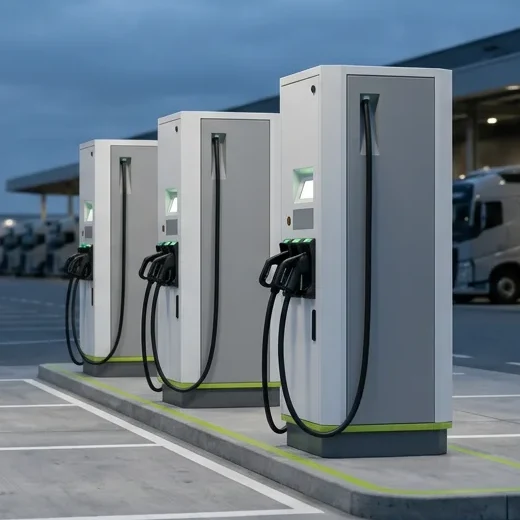
Across our DC portfolio, this principle is applied according to real-world use: the DC80 LQ and DC480 combine full liquid cooling of cable and power module for continuous, high-duty-cycle operation, while the DC80 Mobile liquid-cools the power module to eliminate derating in flexible, portable deployments — each engineered around how it is actually going to be used, not a single fixed specification.